
Display Table of Contents
Key takeaways
- Check the title register and title plan first; restrictions often appear there.
- Ask the seller for the original transfer or conveyance; covenants sit in the wording.
- Read for who can enforce the restriction, not just what the restriction says.
- Confirm whether the covenant is positive or restrictive; enforcement and costs differ.
- Flag common limits early: extensions, business use, parking, pets, and alterations.
- Use a conveyancing solicitor to interpret ambiguous clauses and check enforceability.
- Before exchange, price in solutions: consent, indemnity insurance, or deed of release.
Where deed restrictions come from and how they attach to a property
Ask the seller’s solicitor for the title register and title plan on day one, then confirm any restrictions against the official record before you spend money on surveys or designs. Most deed restrictions enter the title when a landowner sells off part of an estate and sets conditions to protect what remains. Developers also use restrictions to control appearance, use, parking, or future building on an estate. Some restrictions come from historic conveyances and can still bind modern owners if they were drafted to “run with the land”.
Restrictions attach to the property, not the owner. Once recorded, they can bind each new buyer even if the buyer never saw the original deed. In England and Wales, the key evidence sits in the Land Registry title: the Charges Register often lists restrictive covenants and may refer to a separate deed “filed” or “available on request”. Order the register and any referenced documents from HM Land Registry, then read the exact wording, the date, and the land that benefits. Interpretation turns on precision.
Check who can enforce the covenant, whether it benefits identifiable neighbouring land, and whether it limits use (for example, business use, alterations, or additional buildings). If a restriction blocks planned works, ask your solicitor about consent from the beneficiary, indemnity insurance, or an application to modify or discharge under section 84 of the Law of Property Act 1925.
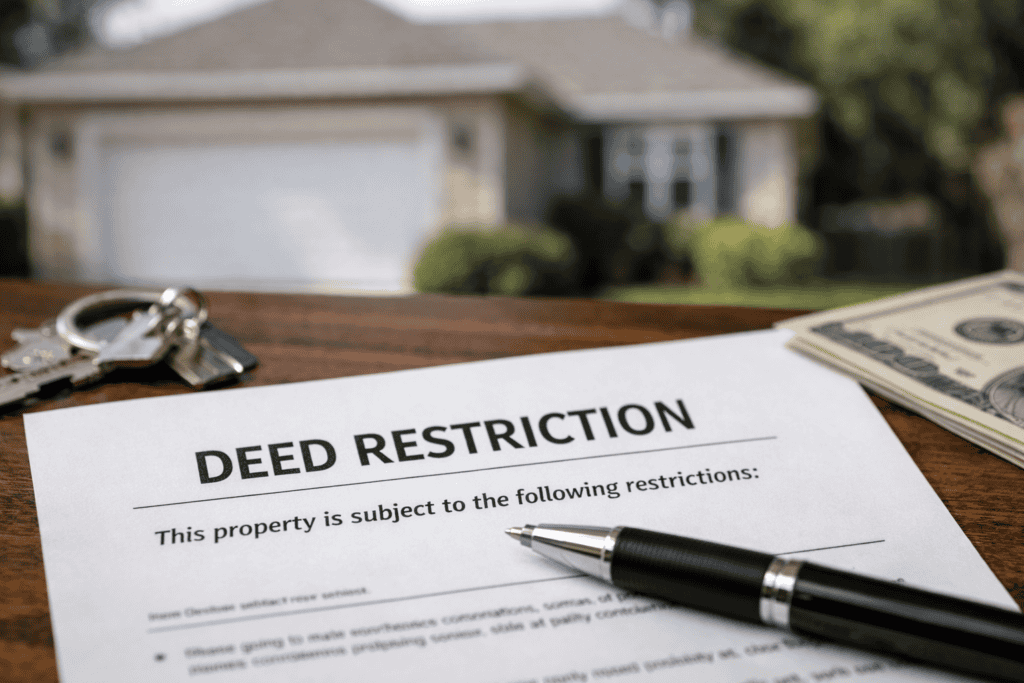
Common deed restrictions that affect use, alterations, and resale
A single restriction can block an extension, stop a business use, or delay a sale until a third party consents. Prioritise restrictions that change how the property can be used or altered: limits on building works, bans on converting to flats, rules on parking commercial vehicles, and requirements to keep a uniform frontage. Link each clause to a decision you will make, then flag whether consent, a deed of release, or indemnity insurance is needed.
Some restrictions matter mainly at resale, such as pre-emption rights, consent-to-transfer clauses, or limits on letting. If the title wording is unclear, ask the conveyancer to check the original deed and confirm planning and listed-building constraints through the local authority search.
How to find deed restrictions before you exchange contracts
Buyers often rely on the estate agent’s notes or the seller’s memory, then discover a binding restriction during conveyancing when changes cost more. Use the official title documents, not marketing material. Ask the seller’s solicitor early for the title register and title plan, then check the same entries on HM Land Registry.
Restrictions can sit in filed deeds, so request copies of every document the register cites. Read each clause as conditions: who benefits, what needs consent, and what counts as a breach. Check defined terms and any time limits. Confirm enforceability by identifying the beneficiary and whether that party still exists.
- Confirm the consent route: named party, notice address, and any fee or survey requirement.
- Request evidence of past consents or releases, plus any indemnity policy already in place.
- Ask your solicitor to flag clauses needing a deed of variation or release before exchange.
Match each restriction to planned works and timescales, then decide whether to proceed, renegotiate, or make exchange conditional on consent.
How to interpret restriction wording, enforceability, and risk level
A restriction can be legally binding even if the seller says it has “never been enforced”. Treat the wording as a risk check before you commit to plans, budgets, or a completion date. Find the exact clause in the title register or filed deed, then read it as conditions: who benefits, what is banned or required, and whether consent can be granted. Look for “not to”, “without consent”, “at all times”, and “for the benefit of”, as these change how strict the clause is.
Confirm who can enforce it, such as a named person, a management company, or the owner of retained land. Your solicitor can trace the benefit through the title and advise whether it still exists. Match the clause to your intended use to grade the risk. A restriction that blocks building works, change of use, or sale without consent needs a clear route to consent or a deed of release.
Do not rely on informal permission, assume age makes a clause void, or treat indemnity insurance as a substitute for consent after you have approached the beneficiary.
What to do if you discover a restriction: consents, indemnity insurance, and next steps
Handling a restriction well can keep a purchase on track, protect mortgage funding, and stop expensive redesigns after exchange. Start by asking the conveyancer to confirm the exact wording in the title register or filed deed, then identify who can give consent or enforce the covenant.
The beneficiary may be a neighbour, a management company, a developer, or a dissolved company’s successor. If the beneficiary is unclear, the conveyancer can check historic transfers and, where relevant, Companies House records via Companies House. When the clause allows consent, treat it like a formal approval process. Ask for the consent route, likely evidence needed (plans, method statements, materials), fees, and timescales, then insist on written consent executed as a deed where required.
If the restriction blocks the intended use, the next step is a deed of release or variation, negotiated and registered so future buyers and lenders see the change. Indemnity insurance can suit low-risk breaches or historic issues, but it does not remove the restriction. Insurers often refuse cover if contact has been made with a potential enforcer, so agree the strategy before any approach. If risk remains high, renegotiate price, change plans, or walk away before exchange.
Frequently Asked Questions
What is a deed restriction, and how does it affect what you can do with a property?
A deed restriction is a legally binding rule written into a property’s title that limits how the land or building can be used. It can control changes such as extensions, business use, parking, or keeping certain animals. Restrictions can reduce flexibility and affect value, and breaching them may trigger legal action or force you to undo work.
Where can you find deed restrictions before you buy a property in the UK?
Most restrictions sit in the property’s title documents, not in the sales listing. Check the Land Registry title register and title plan, plus any filed deeds referred to in the register. Review the seller’s TA6 Property Information Form and ask the conveyancer to confirm any covenants, easements, or estate rules.
What types of deed restrictions commonly appear on residential properties?
Check the title register and any filed deeds before you commit, then ask a solicitor to flag anything unclear. Restrictions often limit building works (extensions, lofts, outbuildings), changes to use (no business use, no subdivision), and appearance (materials, fences, parking, satellite dishes). Some control ownership or access, such as rights of way, shared drive rules, or bans on letting.
How can you interpret the wording of a deed restriction to understand what is permitted?
Assume the restriction is enforceable unless the wording is clearly ambiguous. Read the exact verbs and limits: “must” and “shall” impose duties, while “may” allows choice; note any dates, measurements, and defined terms. Check who benefits and who can enforce it, then confirm whether exceptions, consents, or “reasonable” tests apply.
What steps can you take if you discover a deed restriction that conflicts with your planned use of the property?
Take at least three steps before you commit: confirm the restriction’s exact wording and who can enforce it. Ask a conveyancing solicitor to interpret it and assess risk. Seek a formal release or variation from the beneficiary, or change your plans; if needed, negotiate price or withdraw.