
Display Table of Contents
Key takeaways
- Refresh kerb appeal with paint, tidy borders, and a clean, safe entrance.
- Prioritise kitchens and bathrooms using new hardware, taps, and resealing.
- Improve energy efficiency with loft insulation, draught-proofing, and LED lighting upgrades.
- Fix visible defects fast: leaks, cracked tiles, sticking doors, and damaged skirting.
- Maximise light and space by decluttering, mirrors, and neutral paint throughout.
- Create usable outdoor space with simple seating, lighting, and low-maintenance planting.
High-impact kerb appeal upgrades under £500
External appearance can shift buyer behaviour quickly: NAR’s 2023 Remodeling Impact Report found that a new roof delivered a 100% cost recovery at resale, while a new garage door returned 100%. Those projects often exceed £500, but the same principle applies at a smaller scale: visible, front-of-home improvements tend to influence first impressions and viewing momentum. For a £500 cap, prioritise upgrades that buyers notice within the first 10–30 seconds of arrival, and that reduce “perceived maintenance” signals such as peeling paint, tired hardware, or poor lighting. Start with a front door refresh, because it concentrates attention in one focal point. A tin of exterior paint and new ironmongery typically sits within £80–£200, yet it can modernise the elevation more than larger, less visible works. Pair the door with updated house numbers and a letter plate, keeping finishes consistent (for example, matte black or brushed nickel) to avoid a mismatched look.
- Lighting upgrade (£25–£120): Replace dated fittings with an IP-rated LED wall lantern (often 6–12W) to improve evening viewings and security cues.
- Pressure washing (£30–£150): Clean paving, paths, and brickwork; a single afternoon can remove years of staining and algae.
- Planting and edging (£40–£180): Use two large planters and low-maintenance evergreens; keep borders crisp with new edging to signal routine upkeep.
- Hardware and details (£20–£90): Replace a tired door knocker, bell, and meter-box cover to remove “small defects” buyers often overprice mentally.
Allocate the budget with a simple split: about 50% to the door and entry, 30% to cleaning and repairs, and 20% to planting and lighting. This mix targets the highest-visibility surfaces while keeping spend controlled and outcomes measurable.
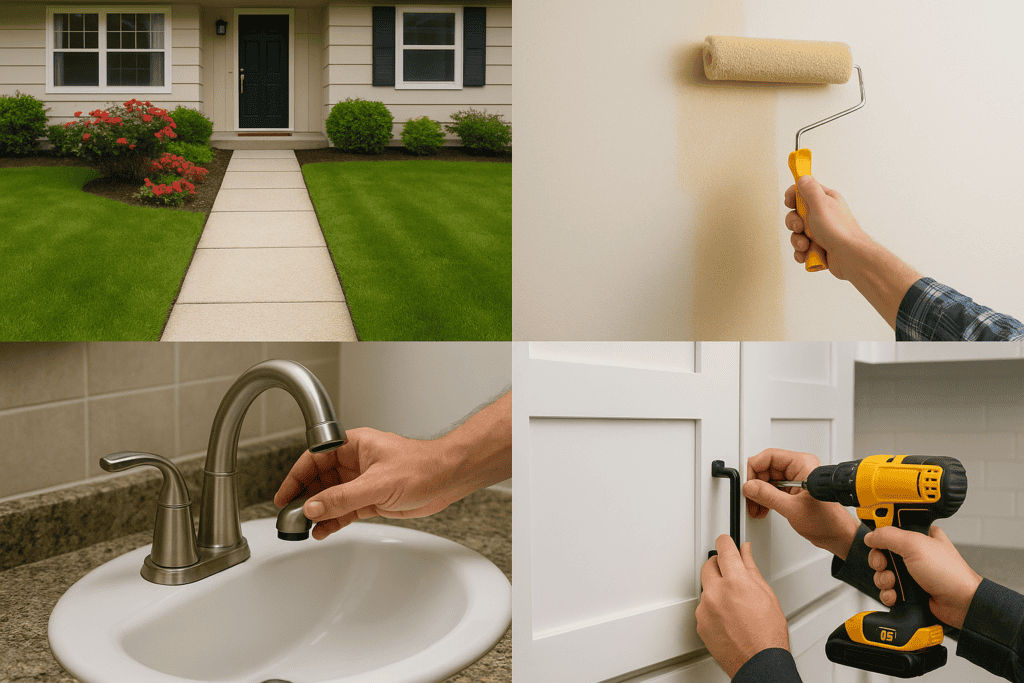
Low-cost interior refresh: paint, lighting, and flooring touch-ups
A landlord in Leeds prepared a two-bedroom flat for sale with a £350 budget. The living room had nicotine-stained magnolia walls, a single harsh ceiling pendant, and scuffed laminate at the doorway. After one weekend, the space looked newer: two coats of durable matt emulsion (£45–£70), a warm 2700K LED fitting (£25–£60), and a flooring repair kit plus threshold strip (£20–£40) removed the most visible wear. That combination works because buyers anchor value to what they can see and touch. Paint resets colour and odour cues, while modern lighting lifts perceived brightness without structural work. Flooring touch-ups reduce “deferred maintenance” signals that often trigger price negotiation. For context, Zoopla reports UK buyers spend about £12,000 on average after moving, so a clean, move-in-ready interior can protect your asking price. Apply the same logic room by room: choose one neutral colour throughout, match bulb colour temperature across fittings, and repair high-traffic edges before replacing whole floors. Aim for a 1–2 day refresh that photographs well and reads as cared-for at the viewing.
Energy-efficiency improvements that raise value and cut bills
Loft insulation and draught-proofing deliver measurable savings with minimal disruption, while replacement windows and boilers cost more but can shift a home’s Energy Performance Certificate (EPC) rating. In Great Britain, the median SAP score rose from 59 (EPC band D) in 2010 to 66 in 2024, showing steady value in efficiency upgrades (UK Government EPC statistics). Option A targets quick wins: topping up loft insulation and sealing gaps around doors can reduce heat loss without major works. Option B targets capital items: modern condensing boilers and double glazing can improve comfort and reduce maintenance risk, but payback varies by property and installation quality. The key difference is cost-to-signal ratio. Low-cost measures can cut bills quickly, while higher-cost upgrades can strengthen survey outcomes and buyer confidence. Prioritise measures that improve EPC inputs and keep installer certificates and receipts, since documented upgrades often carry more weight in valuation and negotiation.
| Upgrade type | Typical cost range (UK) | Primary value driver |
|---|---|---|
| Loft insulation top-up | £300–£700 | Lower running costs; EPC improvement potential |
| Draught-proofing | £50–£250 | Comfort gains; reduced heat loss |
| Smart heating controls | £150–£300 | Better temperature control; efficiency signalling |
For context, a typical UK household used 2,700 kWh of electricity and 11,500 kWh of gas in 2024, so small percentage reductions can translate into visible annual savings (Ofgem).
Kitchen value boosts on a tight budget: hardware, worktops, and fixtures
Kitchen presentation often drives buyer judgement, yet tired handles, stained worktops, and dated taps can signal a full refit. In the UK, a mid-range kitchen replacement costs about £10,000 (2024) and an upscale remodel averages £30,000 (2024), according to Remodeling Magazine. That gap makes small, visible upgrades a practical route when funds stay under £500. Start with hardware, because buyers touch it. Replace 12–18 cupboard pulls with matching brushed nickel or matte black handles (£2–£6 each) and swap two hinges that sag. Next, refresh the worktop surface: apply a specialist worktop paint or wrap to cover heat marks and scratches (£60–£150), then seal edges to prevent water ingress around the sink cut-out. Finish with fixtures: fit a modern monobloc mixer tap (£60–£140) and change the sink waste and overflow (£15–£30) to remove tarnish. Complete the work in one weekend: measure hole centres before ordering handles, degrease with sugar soap, and use a template to keep alignment within 1–2 mm. Expect a cleaner, newer look for roughly £180–£420, with fewer “needs updating” comments during viewings and stronger perceived value at the same asking price.
Bathroom upgrades without a full refit: sealing, fittings, and ventilation
Bathrooms influence price expectations because buyers associate visible wear with hidden water damage. In the 2024 Cost vs. Value Report (Remodeling Magazine), a midrange bathroom remodel returned about 73.7% of its cost at resale, indicating that even modest improvements can protect value. A full refit often exceeds £5,000–£10,000 in the UK, so targeted work that improves cleanliness, function, and moisture control offers a better cost-to-impact ratio under £500. Start with sealing and surface finishing because buyers notice grout and silicone at eye level. Replacing mouldy perimeter silicone and regrouting high-contrast joints typically costs £20–£60 in materials and takes 2–4 hours, yet it removes the “leak risk” signal during viewings. Pair that with a deep descale of taps, shower screen, and waste fittings; limescale builds quickly in hard-water areas and can make a bathroom look older than it is. Swap small fittings that buyers touch. A new thermostatic shower head, modern basin mixer, and matching towel rail can land within £80–£250 depending on finish, while improving perceived quality. Ventilation then protects the upgrade: aim for an extractor fan rated at roughly 15–30 litres per second for typical bathrooms, and use a timer or humidity sensor to reduce condensation and recurring mould.
Documentation and compliance: certificates, surveys, and maintenance records that support valuation
A seller in Nottingham accepted an offer within 10 days, then lost the buyer at survey stage when the solicitor asked for a missing electrical certificate and evidence of a boiler service. The buyer’s lender requested confirmation that the electrics met current standards, and the absence of paperwork introduced risk and delay. The seller paid £180 for an Electrical Installation Condition Report (EICR) and £90 for a boiler service, then re-marketed with a complete pack. That documentation changed the negotiation. A clean EICR reduces uncertainty around rewiring costs, which often run into several thousand pounds in older homes. A current Gas Safe service record signals safe operation and routine care, and it supports the property information forms that buyers rely on. In England and Wales, a HomeBuyer Report typically costs about £400–£1,000, so buyers scrutinise any gap that could trigger a down-valuation or retention. Apply the same approach to smaller items: keep receipts for roof repairs, damp treatment guarantees, window installations, and extractor fan upgrades, and store them in one folder. When buyers compare listings, clear evidence of maintenance helps a home stand out, especially when how online platforms make price shifts more visible through instant alerts and comparable sales. For certificates, use the official registers at Gas Safe Register and NICEIC to confirm contractor credentials.
Frequently Asked Questions
Which low-cost home improvements typically deliver the highest return on investment when selling a property?
Low-cost improvements with strong resale returns include repainting walls in neutral colours (often £200–£800 in materials), improving kerb appeal with basic landscaping and a new front door handle (£50–£300), upgrading lighting to LED fittings (£5–£25 per bulb), and deep cleaning plus minor repairs. These changes can lift perceived value without major structural work.
How much can fresh interior paint and updated lighting increase perceived property value in the UK market?
In the UK, fresh neutral interior paint and modern lighting typically lift perceived value by about 1–3% and can shorten selling time by 1–2 weeks. A full repaint often costs £1,500–£4,000 for a typical three-bedroom home, while replacing key fittings can cost £200–£1,000, supporting stronger first impressions and higher offers.
What budget-friendly kerb appeal upgrades can improve a property’s valuation without major landscaping work?
Low-cost kerb appeal upgrades include repainting the front door and trim, replacing house numbers and the letterbox, and upgrading exterior lighting to LED (typically 6–12W). Pressure-wash paths and driveways, repair cracked paving, and add fresh mulch to existing beds (50–75mm depth). Install a new doormat and tidy bins and fencing.
Which energy-efficiency upgrades under £1,000 can raise property value and improve EPC ratings?
Under £1,000, prioritise draught-proofing (£100–£300), loft insulation top-ups to 270 mm (£400–£700), a smart thermostat (£150–£250), LED lighting throughout (£50–£150), and hot-water cylinder insulation plus pipe lagging (£30–£120). These measures cut heat loss and electricity use, often lifting EPC scores by several points, especially in older homes.
What common low-budget renovations reduce property value or trigger issues during a buyer’s survey?
Common low-budget changes that reduce value or fail surveys include poor DIY electrics or plumbing, painting over damp or mould, cheap laminate laid on uneven floors, removing ventilation in kitchens or bathrooms, and covering original features with low-grade finishes. Buyers also flag unpermitted structural changes, missing certificates, and low-quality window or roof repairs.