
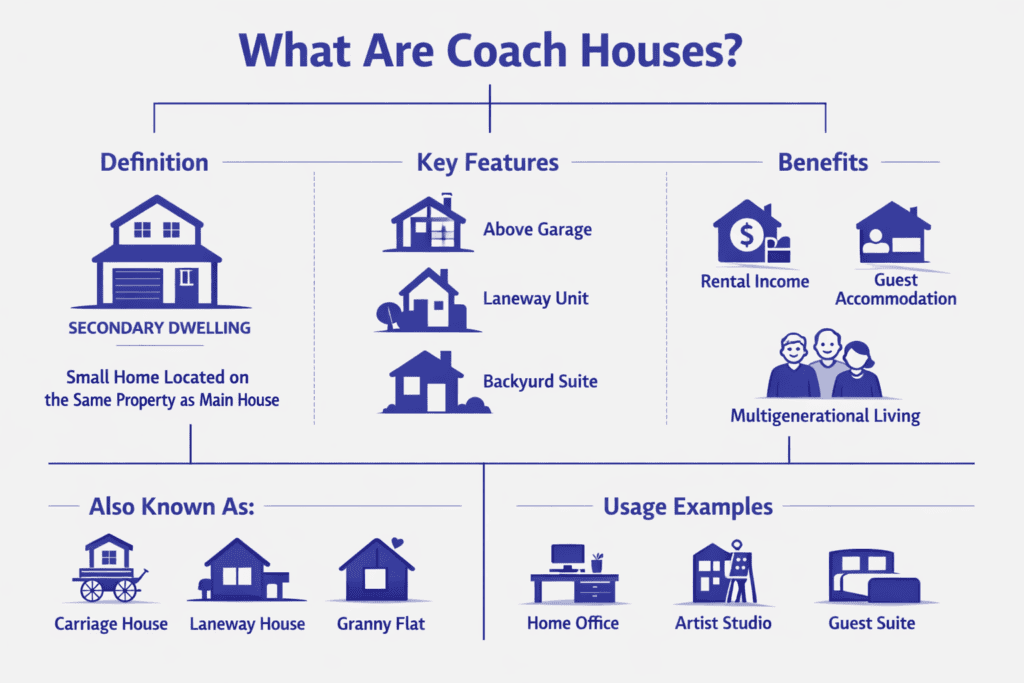
A coach house is a detached or semi-detached property built above or beside a ground-floor garage, archway, or storage space. In modern housing developments, the term usually refers to a small freehold home with living accommodation on the first floor and parking or access space below.
This article explains how coach houses are designed, how they differ from standard houses and flats, and what buyers should check on ownership, access rights, maintenance, and resale value.
Key takeaways
- Check the title plan and lease, because “coach house” has no fixed legal meaning.
- Judge a coach house by structure, access and ownership, not estate-agent labels.
- Most coach houses place main living space above garages, parking bays or storage.
- Confirm who owns garages below, supporting walls, archways and any shared access routes.
- Review whether the property is freehold, leasehold, or freehold with leasehold garages beneath.
- Expect benefits like fewer shared walls, but check for colder rooms above unheated garages.
- Ask a solicitor to verify insurance, repair duties, service charges and rights of way.
What Defines a Coach House in Modern Property Terms
Check the title plan and lease details before relying on the name alone, because “coach house” has no single legal meaning in modern property listings. Estate agents and developers often use the term for homes built above garages, parking bays or storage space, even when the design has little link to a historic carriage house.
In UK property terms, the layout matters more than the label. A modern coach house is often a freehold or leasehold home with its main living space on the first floor and another owner’s garage or shared access beneath part of the building. The legal documents set out who owns the structure, who maintains the archway or passage, and whether service charges apply.
That detail affects mortgages, insurance, repairs and resale. Lenders may examine flying freehold issues where part of the home sits above land or buildings owned by someone else, and insurers may want ownership boundaries stated clearly. For a reliable description, compare the listing with the title register from HM Land Registry and local planning records.
How Coach Houses Differ from Detached Houses, Flats and Mews Homes
| Property type | Typical structure and access | Ownership and maintenance points |
|---|---|---|
| Coach house | Main living space often above garages, bays or storage with a private front door and no home above | May be freehold or leasehold; shared access, garages beneath and support rights need checking |
| Detached house | Stands on its own plot with no accommodation over communal parking | Usually offers more control over land and maintenance |
| Flat | Part of a larger building with shared entrances, corridors or communal areas | Often involves service charges and more shared responsibilities |
| Mews home | Usually part of a terrace or courtyard at street level rather than raised above garages | Can suit buyers wanting a central setting, but structure differs from a coach house |
Coach houses often give buyers more privacy and fewer shared walls than a flat, while using less land than a detached house. Judge them by structure and access: check what sits underneath, what is shared, and how the title splits ownership and maintenance.
This works better than relying on estate-agent labels. A detached house stands on its own plot, with no accommodation over communal parking. A flat sits within a larger building and often shares entrances, corridors, and service charges. A mews home is usually part of a terrace or courtyard at street level, not a home raised above garages or bays.
Coach houses sit between these property types. They often feel house-like because they have a private front door and no home above. Yet they may still involve leasehold terms, shared access, or duties linked to garages and archways below. Buyers who want maximum control over land and maintenance will usually prefer a detached house. Flats and some mews homes may suit buyers who want lower upkeep or a more central setting.
Typical Layout, Garage Arrangement and Access Rights
Layout often causes confusion because the living space sits above garages or open parking bays with different owners. The main accommodation is usually on the first floor, reached by an external staircase or a private internal stair from a ground-floor entrance. Bedrooms, kitchen and living areas often sit on one upper level, with little or no habitable space below.
The garage arrangement needs close checking in the title plan and lease. Part of the structure beneath the home may be a private garage, while adjacent bays can belong to neighbours or remain communal. That split affects who repairs the ceiling over the garages, supporting walls, shared driveway surfaces, and any lighting or drainage serving the access area.
Access rights matter as much as the physical layout. A coach house often depends on legal easements or lease clauses for entry over a shared drive, access to meters, bin storage, and repair rights over land outside the main title. Clear drafting makes daily use straightforward. Vague rights can make disputes over parking, maintenance, and access harder to resolve.
Common Ownership, Leasehold and Freehold Considerations
The title documents decide who owns the structure, who repairs shared parts, and who pays when problems arise. Check the Land Registry title register, title plan and any lease before you commit, because coach houses often sit above garages, archways or access routes used by other owners.
Confirm whether the home is freehold, leasehold, or freehold with leasehold garages beneath. Then check rights of way, rights of support, and covenants covering walls, roofs, foundations and accessways. If a management company maintains shared areas, review service charge accounts, planned works and how owners must contribute.
Do not assume freehold means complete control. Some freehold coach houses still carry estate charges, shared repair duties and legal obligations to support neighbouring garages. Leasehold homes need extra checks on ground rent, lease length, repair clauses and building insurance.
Avoid relying on sales details alone. Read the lease plan carefully, ask a conveyancer to explain any flying freehold element, and check whether the ownership structure suits your long-term plans, including Property Investment or future resale.
Advantages and Drawbacks of Buying a Coach House
- Often offers more privacy and fewer shared walls than a flat
- Can feel more house-like because there is usually a private front door and no home above
- Uses less land than a detached house while still giving some separation from neighbours
- Ownership boundaries can be more complex than the name suggests
- Shared access, garages beneath and archways can create repair and maintenance disputes
- Mortgage, insurance and resale can be affected if rights and title drafting are unclear
Noise, privacy and resale appeal often improve when a coach house is well designed, but heating costs and legal complexity can rise. Buyers often like fewer shared walls, a separate entrance and the feel of a small house rather than a flat. Space above garages can also create useful separation from neighbouring homes.
That layout brings limits as well. Rooms above unheated garages may feel colder in winter, and access usually depends on stairs, which reduces suitability for anyone needing step-free living. Storage may also be tighter than in a standard detached house, especially where the ground floor is mostly entrance hall and garage space.
Running costs and saleability depend on build quality and title structure, not the label alone. Check insulation, sound transfer through the floor, parking arrangements and who repairs any structure linked to garages or archways below. A well-built coach house can offer privacy and lower maintenance than a larger house, but weak soundproofing or unclear repair duties can reduce its appeal quickly.
What to Check Before Buying or Selling a Coach House
Ask a solicitor to review the title, access rights and repair duties before you agree a sale or exchange contracts. That gives the clearest view of risk, because coach houses often involve shared structures, garages below, archways or land another owner uses.
Buyers should confirm who insures the building, maintains any archway or supporting walls, and whether service charges apply. Sellers should gather the lease, title plan, management information and repair records early, because missing documents can delay enquiries and unsettle lenders. If insurance duties are unclear, review suitable property insurance guidance before marketing or exchanging.
Mortgage checks also need attention. Some lenders examine coach houses more closely where part of the structure sits over shared access or garages owned by others, so buyers should confirm lending terms before paying for surveys and legal work.
A freehold coach house with no shared access or management company may need fewer enquiries, but it still needs careful title and survey checks. For broader guidance on related property issues, see More from Property Help.
Frequently Asked Questions
What is a coach house?
A coach house is a self-contained home built above a ground-floor space, often garages or storage. It usually sits within a larger housing development and may be detached or linked to neighbouring buildings. Modern coach houses take their name from older buildings that once stored horse-drawn carriages.
How does a coach house differ from a standard detached house?
The key difference is layout. A coach house usually has living space above a garage or carport, often with shared access or neighbouring garages below. A standard detached house stands fully on its own plot, with main rooms at ground level and no built-in undercroft parking arrangement.
What are the typical features of a modern coach house?
Look for a self-contained living space above one or more garages, with a private entrance and compact layout. Modern coach houses often include open-plan kitchens and living areas, one or two bedrooms, and built-in storage. Many also have allocated parking, shared accessways, and a small freehold or leasehold footprint.
Are coach houses freehold or leasehold?
Check the title deeds first, because coach houses can be either freehold or leasehold. Many are sold as freehold, but shared accessways, parking areas or garages beneath can still carry management charges or legal obligations. Some developments use leasehold titles instead, especially where communal areas need ongoing maintenance.
What should buyers check before purchasing a coach house?
Two checks cause most problems later: freehold versus leasehold and rights over the shared access below. Confirm who owns and maintains the archway, parking areas and any communal parts. Review service charges, buildings insurance, repair duties, and whether neighbours have legal access or support rights affecting the structure.